
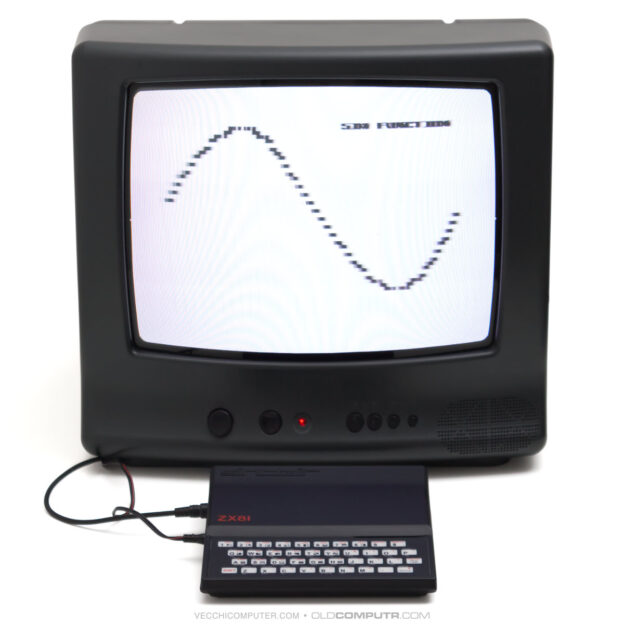
I bought this computer from the son of a retired dealer and repairman at my usual market in November 2011. I remember visiting his father’s shop in the late 1980s and buying a copy of GEOS for the Commodore 64. However, I’m still undecided about whether to continue going to the monthly Sunday market, as even the “basement clearance” sellers are now charging eBay prices. A few years ago, given how often I visited, when I asked the price of a Commodore 64, I was told, “15 euros because it’s you”. The last time I was there, I asked the price of some Game Boys on the counter. The answer I received was “The price is on the back”, without so much as a glance in my direction. Between €80 and €120. In the last six months, I’ve only bought a power supply for a Nintendo DS Lite.
Returning to the subject of the article: I took it home, connected it to the television and found that it didn’t work. After leaving it in a drawer for a couple of years, I bought a replacement ULA in September 2013. The ZX81 turned on, but the keyboard didn’t work. The plastic membranes stiffen and the flat cables break at the first bend. Unlike the ZX Spectrum and other computers of the time, which have the membrane under the keyboard, the ZX81’s membrane is a single piece — the layer with the key screen prints is part of the membrane itself.
The computer therefore remained in a box until a few weeks ago, when I ordered several membranes to repair some Spectrum computers, a couple of QLs, and of course this ZX81.
The replacement membrane is fairly similar to the original, but not identical; when placed side by side, you can see that the keys on the new version are a lighter colour.
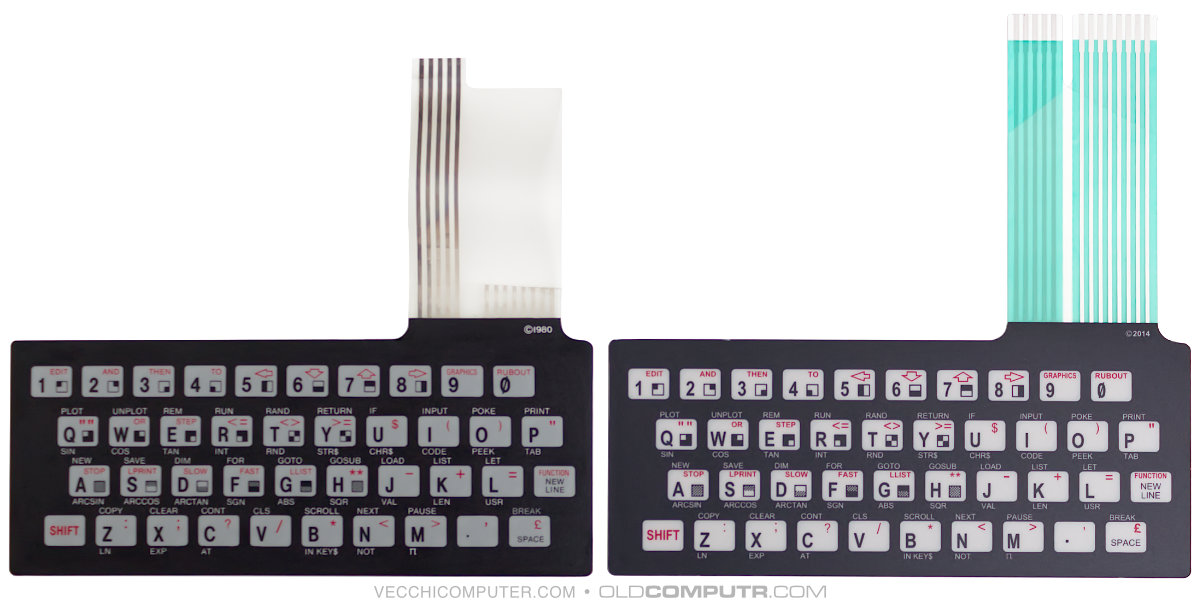
The thickness differs, too: the modern one is thicker and therefore slightly less flexible, particularly where it enters the case at the top.

While the RF signal from the ZX Spectrum’s antenna output can be picked up on LCD TVs from a few years ago, the ZX81’s signal is very unstable. In fact, I could only display the screen correctly on an old CRT TV.
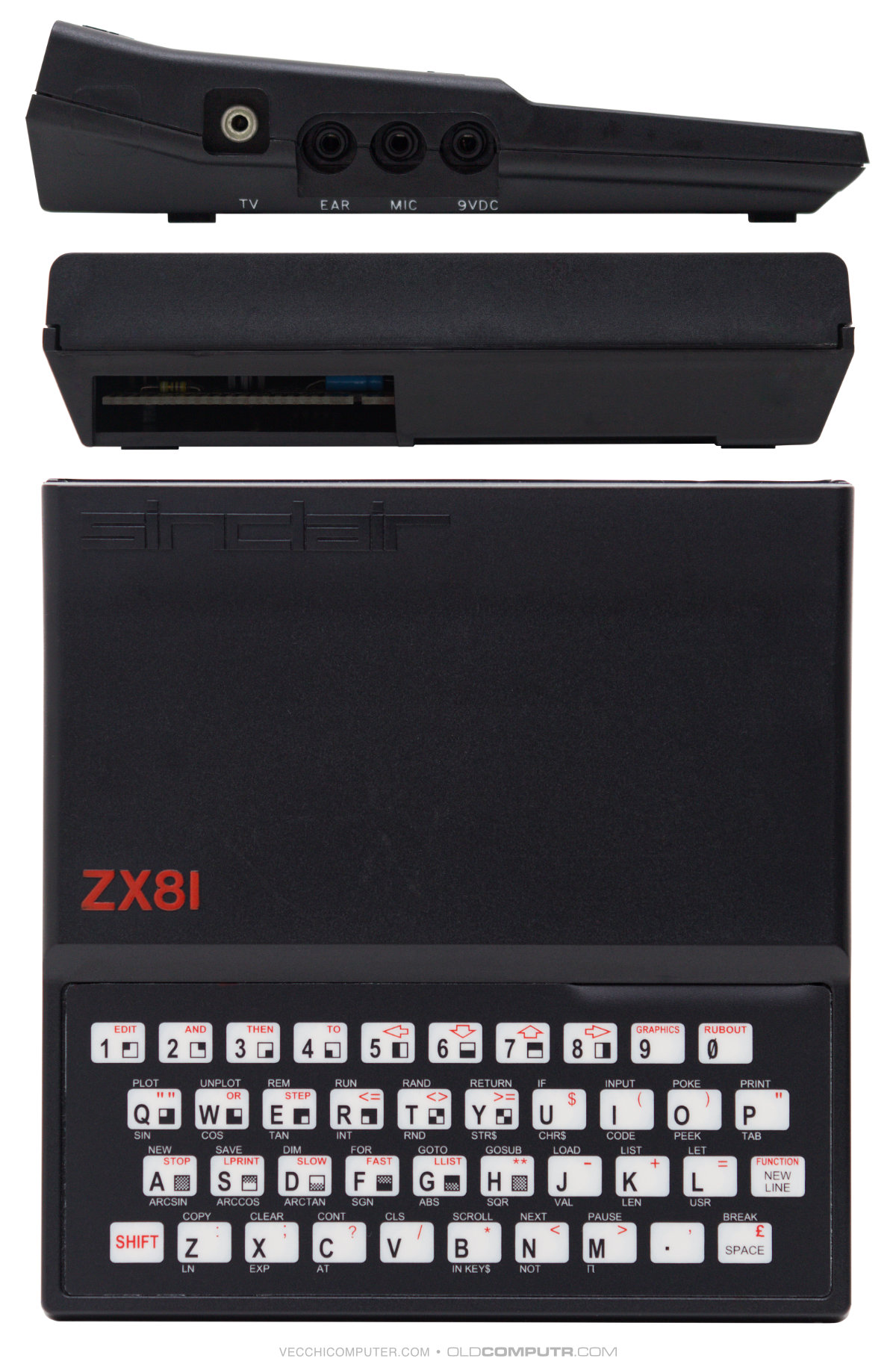
This is an exploded view of the Sinclair ZX81. Three of the five screws that hold the two parts of the case together are located under the rubber feet.
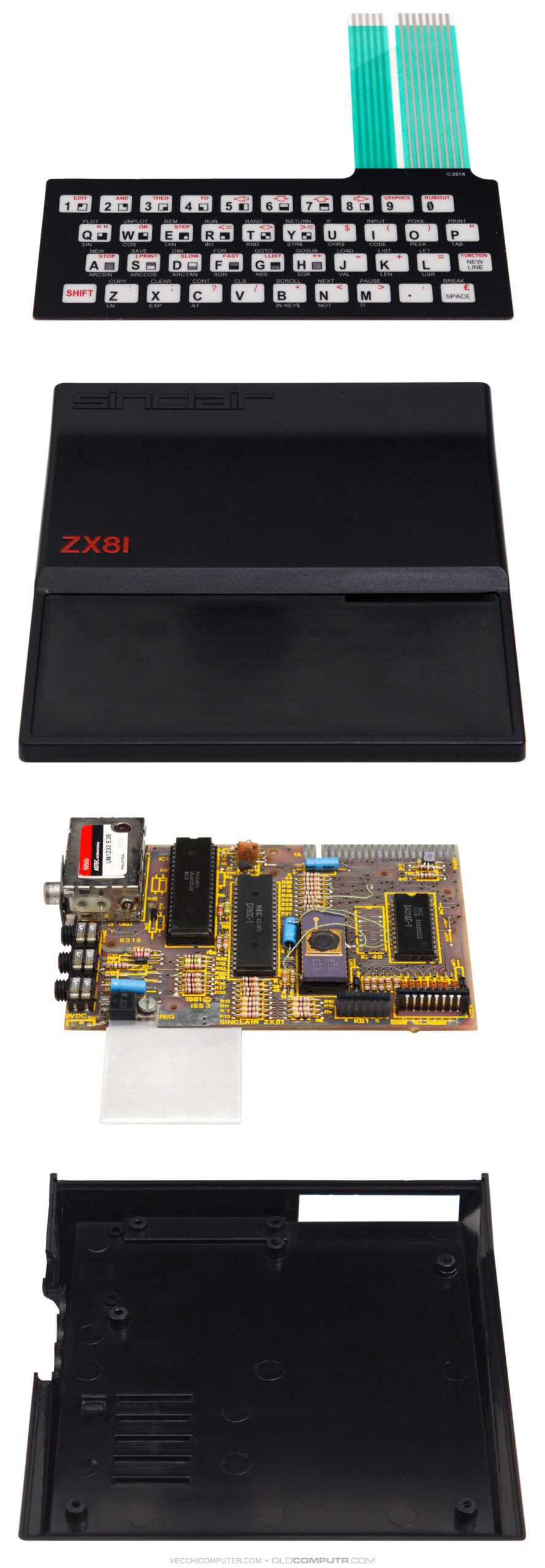
The motherboard, an issue 3, with the four main components: ULA, CPU, ROM and RAM.
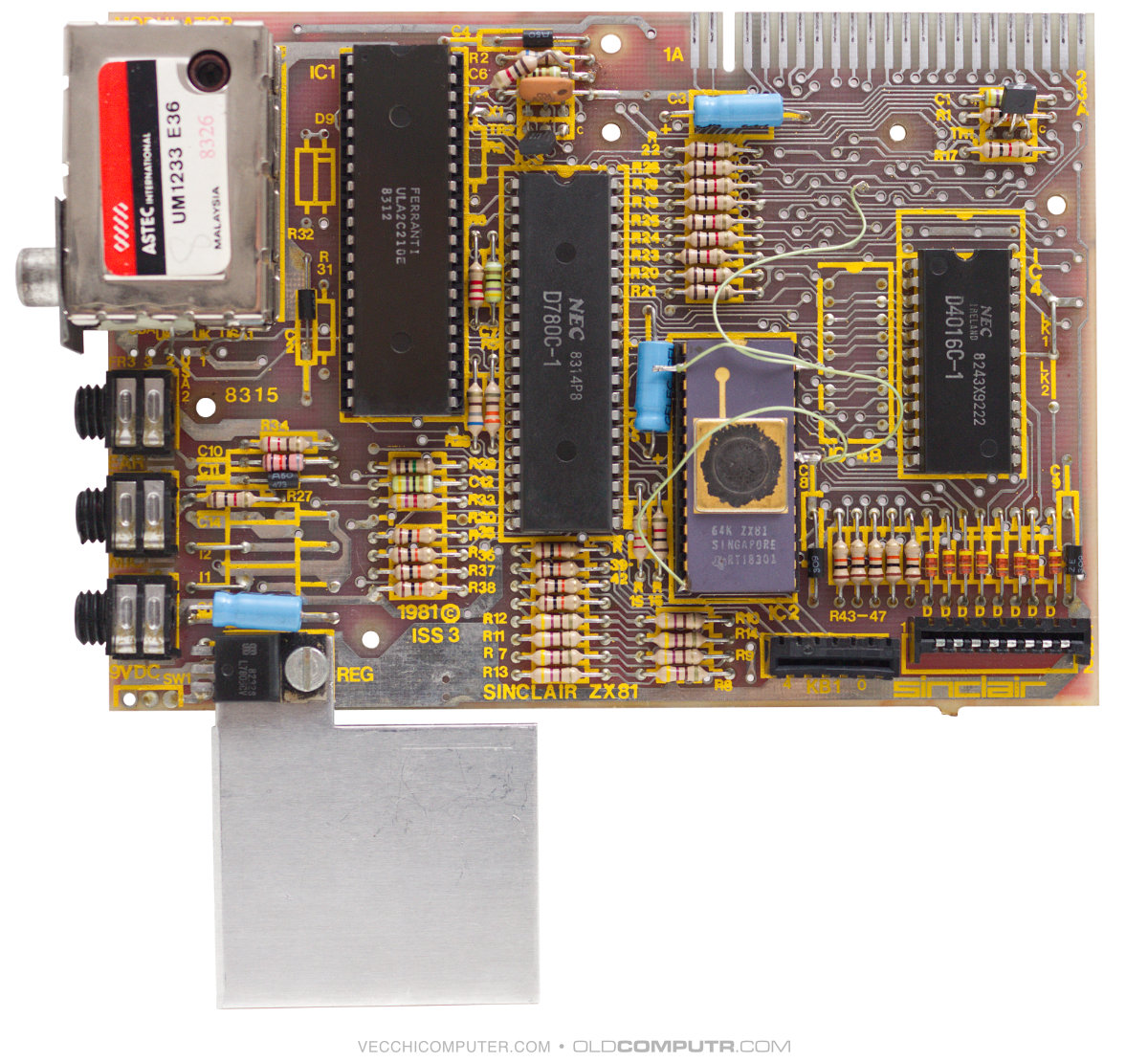
The ZX81 features 1 KB of RAM, and mine is obviously no exception; but reading the specifications of the integrated circuit on the motherboard, it seems to be 2 KB: perhaps it was cheap in large quantities, or maybe defective RAM modules with the first or second kilobyte not working were sold as 1 KB RAM.
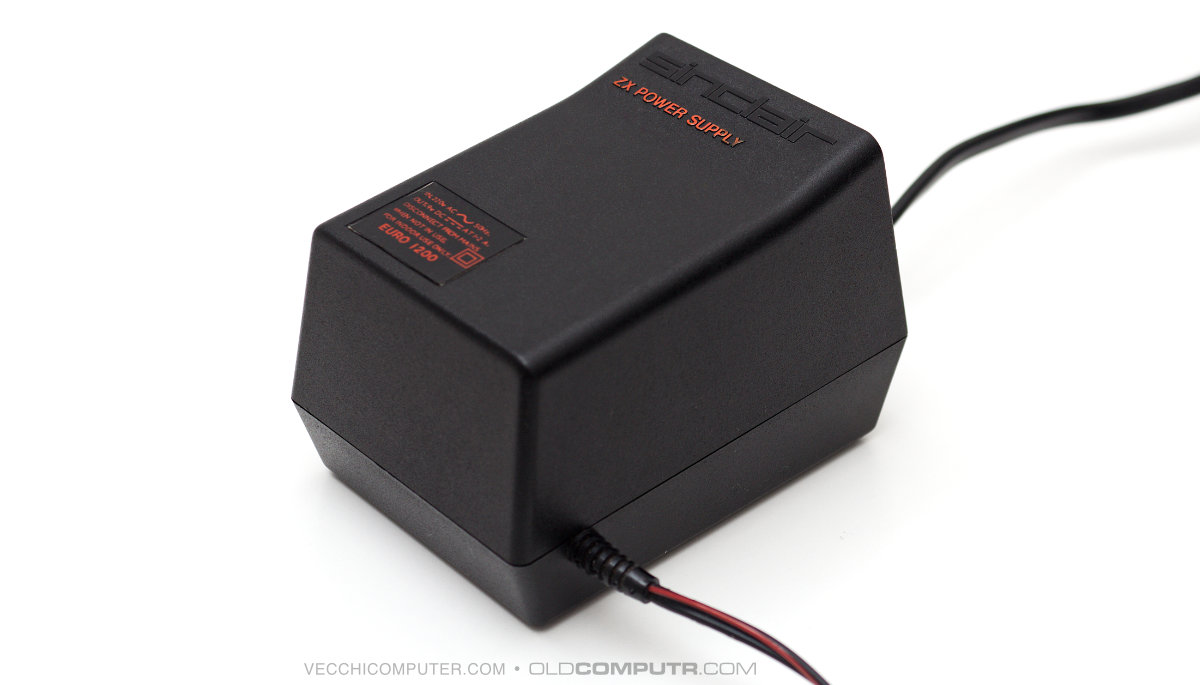
This is the “ZX Power Supply”:
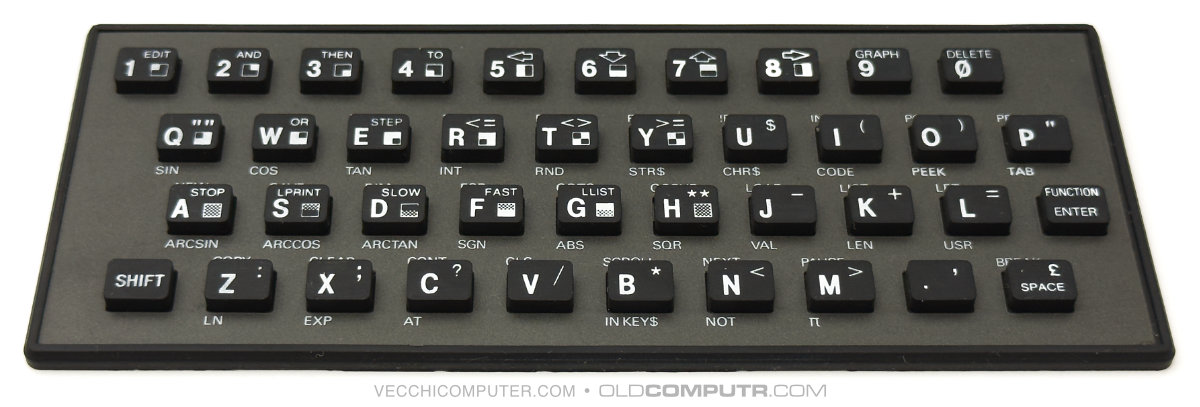
Along with the computer, there was also a third-party keyboard. At the time, the most “serious” and expensive keyboards were external ones that had to be connected to the motherboard. This one, however, simply had to be attached to the existing keyboard with double-sided tape, transforming it from a “fax keyboard” to one “almost like the Spectrum’s”. A big step forward.
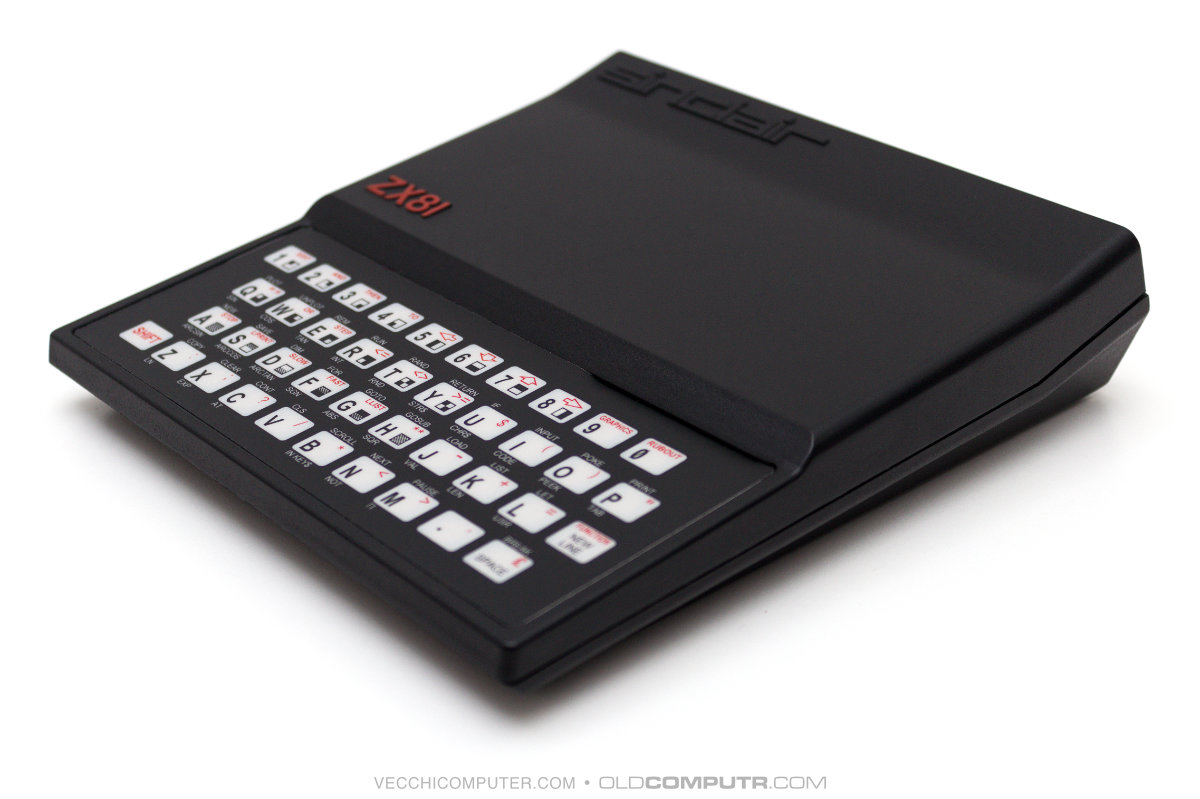
When it was first marketed, the ZX81 certainly introduced many people to programming. It was an inexpensive computer, and even cheaper if you bought it as a kit to assemble yourself. Using it today, even just for a few tests or to write the programme that generates the graph in the opening photo, is quite unbearable. However, from an aesthetic point of view, I find it beautiful.
When the computer is placed next to the power supply, the attention that Rick Dickinson devoted to the design becomes apparent, demonstrating his overall vision and attention to detail. The sloping lines of the power supply correspond exactly to those of the ZX81.

The ZX81 won an award from the British Design Council in 1982. However, since Wikipedia states that the award was given in 1981, I will cite the sources: VADS and Jisc Archives Hub.
Discover more from Oldcomputr.com
Subscribe to get the latest posts sent to your email.
Pingback: Repairs and upgrades to various Sinclair ZX Spectrum computers | Oldcomputr.com